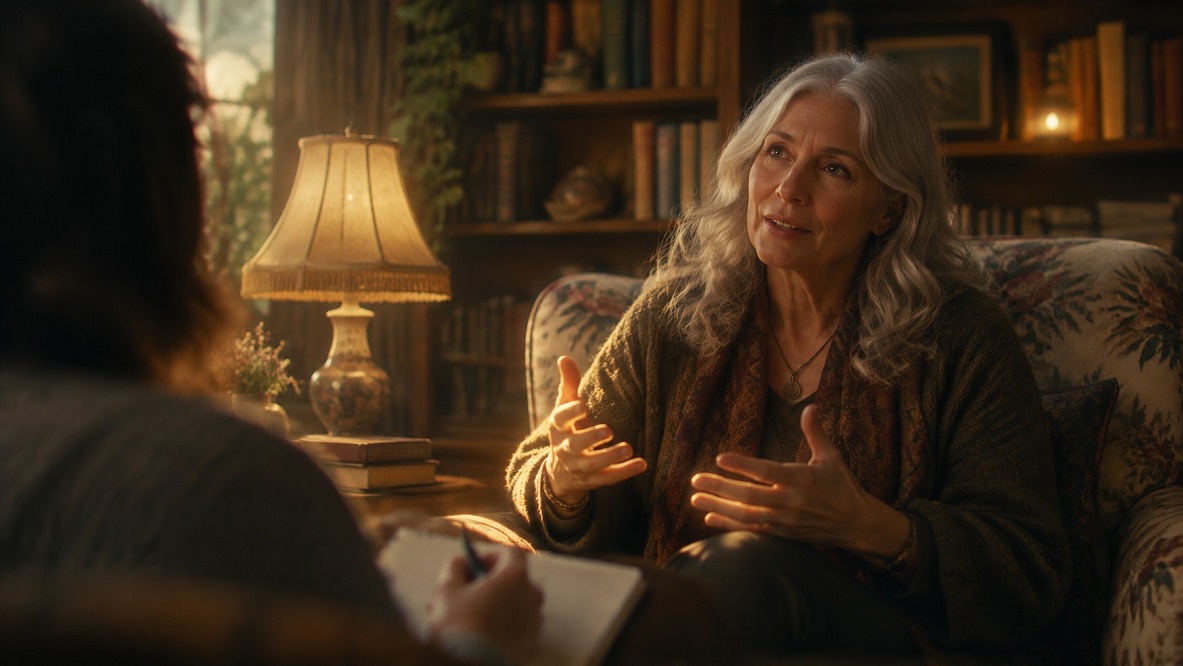
To ask better follow-up questions when interviewing older relatives, begin with open questions, listen without interrupting, and then follow the details they offer. Short prompts about what happened next or how something felt draw out richer stories than yes-or-no questions. Save dates and other hard facts for later in the conversation.
Begin With Open Questions That Invite Stories
The first question sets the tone, so make it a wide one. StoryCorps advises avoiding questions that can be answered with a yes or no, and using openers like “Tell me about” so the storyteller decides what matters most.
Instead of asking whether Grandpa liked his first job, ask him to tell you about his first day. Instead of asking if the farm was big, ask what a day on the farm looked like. Write your first few questions in advance, but treat them as a guide rather than a script. If your relative wanders into a new story, follow along and come back to your list later.
Use Short Follow-Ups to Go Deeper
The best follow-ups are short and curious. They sound like a friend leaning in, not a reporter checking boxes. Keep a few in your pocket:
- And then what happened?
- What do you remember seeing or hearing?
- How did that feel at the time?
- Who else was there?
- What did you say back?
Pick the one that fits the detail you just heard, not the next line on your list. Echoing works too. If your aunt says the kitchen always smelled like bread, say “Bread?” and wait. One short follow-up can open a story that three planned questions would have missed.

Clarify Who Saw What
A good follow-up also helps you sort firsthand memories from retold ones. An oral history guide from the Boston Public Library suggests asking where the narrator was and what they were doing during a key event, which separates what they saw from what they heard.
That matters for genealogy, because many family stories pass through several tellers before they reach you. Try a gentle question such as, “Were you there that day, or did someone tell you about it?” Then write the answer next to the story in your notes, so you know how much weight to give it when you compare it with records later.
Mix In Fact Questions Without Breaking the Flow
The Library of Congress notes that open-ended questions leave room for new questions about a person or story, and that family historians can add targeted questions about birth dates, places lived, and other facts.
Wait for a natural pause, then ask. Something like, “You mentioned the move to Dayton. Do you remember the year?” keeps the story going while you collect what your research needs. Jot the date in your notes and mark it as a memory to confirm with a record. A remembered year is a strong clue, and a record can tell you whether it holds.
Pace the Conversation and Respect Limits
Plan on an hour or so, and ask one question at a time. Let a silence sit for a few seconds before you speak, since a pause gives your relative room to add more. Do not interrupt, even to fix a date. Jot the thought down and return to it later.
Start with easy topics, such as childhood games and favorite foods, and save tender subjects for when your relative seems comfortable. If someone would rather skip a topic, let it go. A relaxed conversation today often leads to a second visit, and a second visit often leads to the best stories.
Prepare Three Follow-Ups Before Your Next Visit
Choose a story your relative has told you before, and write three follow-up questions about it: one about a feeling, one about a place, and one about a person. Bring them to your next visit, and listen for a detail you have not heard yet.
Frequently Asked Questions
How Many Questions Should I Prepare?
Prepare five to eight open questions, and expect to use only a few. Leave room for follow-ups you did not plan. Bring the list as a safety net, not a script.
How Do I Help a Relative Who Gives Short Answers?
Ask about a specific moment instead of a general opinion, such as the last time they saw the old house. A photo or an object can also spark a longer answer. Keep your tone relaxed and give them time.
Should I Record the Interview?
Yes, if your relative agrees. A recording lets you focus on listening instead of writing. Ask permission first, test your device, and keep brief notes on names and dates to double-check later.
How Long Should an Interview Last?
An hour or so works well for many people. Stop sooner if your relative seems tired. You can always plan a second visit.


