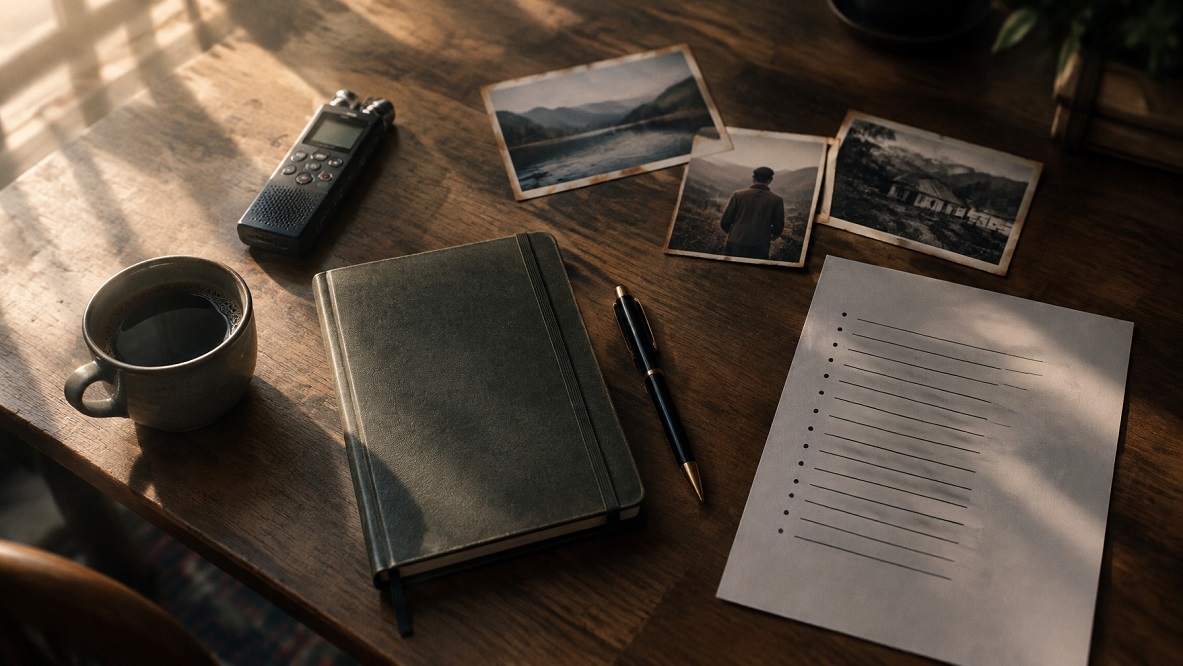
Your holiday interview checklist has four parts: gear, questions, a quiet setup, and a plan for saving what you record. Pack a phone or recorder, a notebook, and a charger. Prepare a few open questions, choose a comfortable spot, and label everything right after. Keep it simple, and let the stories lead.
Gear to Pack
You do not need professional equipment. A small bag with the basics is enough:
- A phone or recorder with plenty of free storage.
- A charger or spare battery.
- A small notebook and two pens.
- Two or three old family photos to prompt memories.
- A one-page family chart for pointing and correcting.
- Tea or water for you and your storyteller.
Pack it the night before so the morning is calm. Check each item once more before you leave the house. A calm start sets a relaxed tone for the conversation.
Questions to Prepare
PBS History Detectives suggests writing your questions before the interview and working through them. Do the same, and keep your list short: five open questions and three fact questions are plenty.
- Open: What is your earliest holiday memory?
- Open: What was your childhood home like?
- Open: Who taught you to cook, work, or play a game?
- Fact: What were your parents’ full names?
- Fact: Where did the family live, and when did they move?
Put the open questions first and the fact questions later, once your relative is relaxed. Leave room between questions for follow-ups.

Set Up a Comfortable Space
The Library of Congress Veterans History Project recommends a quiet, comfortable place and open-ended questions about emotions, senses, and relationships. It also suggests old photographs to prompt memories, and says to pause or end the interview if the person is no longer comfortable.
Choose a seat with good light and a small table for the recorder. Place the phone close to the speaker, and keep drinks away from it. Silence other devices. If the room is chilly or crowded, move. Comfort comes first, and a relaxed person tells better stories.
Tips for the Interview Itself
An oral history guide from the Boston Public Library advises asking one question at a time, giving the narrator your full attention, and not interrupting. If a new question or a spelling comes to mind, jot it down and raise it later. The guide also suggests ending within 60 to 90 minutes so no one gets tired.
Start with easy topics and save tender subjects for later, if you raise them at all. If your relative wants to skip something, let it go. Thank them often, and let the conversation wander. The best story may come from a tangent.
After the Interview: Label and Save
As soon as you finish, rename the file with the speaker’s name and the date. Save a copy in a second place. Then write three lines in your notes: who you spoke with, the main topics, and two follow-up questions for next time.
Add what you learned to your research log, and mark each memory that needs a record to confirm it. Send your storyteller a thank-you note, and share a short highlight if they would like to see one. People who feel heard are happy to talk again.
Starting and Ending the Conversation
Open by thanking your relative and saying what you hope to learn. Then state the date, place, and names on the recording, and begin with an easy question about a favorite food or holiday. Keep your eyes on your storyteller, not the phone.
When time is up, ask one closing question, such as, “Is there anything we did not cover that you would like to add?” That often brings the best story of the day. Say thank you, and mention that you would like to talk again. A warm ending makes a second visit easy to schedule.
If the energy is still high, offer a short break with a snack before continuing. Tired storytellers lose details, and a pause keeps the visit comfortable for everyone in the room.
Print This Checklist Before Your Next Visit
Copy the lists above onto one sheet of paper and keep it with your gear bag. Tick each item as you pack. Thanksgiving is November 26, and the holidays are a natural time to talk with relatives. One prepared page can turn a casual visit into a real keepsake.
Frequently Asked Questions
What Is the Most Important Item on the Checklist?
A prepared list of open questions. Gear can be as simple as a phone and a notebook, but questions shape the conversation. Everything else supports them.
Do I Need a Special Microphone?
Usually not. A phone placed close to the speaker works for most family conversations. Test it first, and use a small external microphone only if you already own one.
How Many People Should Be in the Room?
Two to four is ideal. Fewer people means less noise and more comfort. Invite others to add their own stories later.
How Soon Should I Review My Recording?
Listen within a day or two, while the details are fresh. Write a short summary of topics and note any follow-up questions. Add names, dates, and places to your research log.


