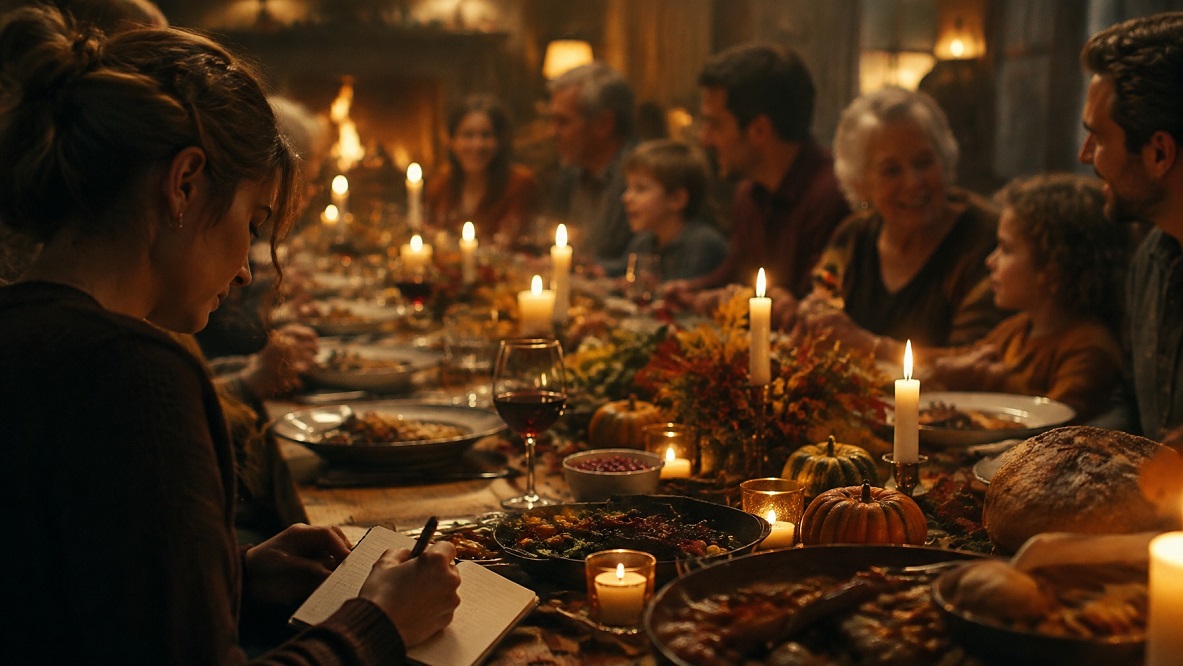
Your Thanksgiving genealogy toolkit is simple: a short list of open questions, a few fact questions, and a way to save the answers. Ask one story question at a time, follow what people say, and slip in dates and places when the moment is right. Bring a pen and a phone, and let the conversation lead.
Choose Open Questions for a Busy Table
The Library of Congress observes that the holiday dinner table lets relatives of several generations share and compare experiences, and that open-ended questions suit family gatherings because they leave room for new questions about a person or story.
Open questions also invite everyone to join in, not only the relative you came to hear. Skip questions that can be answered with yes or no. Ask about a memory, then let people build on each other’s answers. A table with several generations has plenty to share, and one good question can keep it going through dessert.
Open Questions to Start the Conversation
Keep a few questions in your pocket that anyone can answer, from a teenager to a great-aunt:
- What is your earliest holiday memory?
- What dish did our family always make, and who made it?
- What was the house like where you grew up?
- What kind of work did people in our family do?
- Who in the family could always make everyone laugh?
- What saying or tradition should we keep?
- What do you wish you had asked your grandparents?
Pick two or three, not all seven. Ask them between courses, when people are relaxed and plates are quiet. Stories that start at the table tend to grow, and you can always follow up later.

Fact Questions for the Family Genealogist
Stories are the heart of the evening, but you can also gather facts for your tree. Keep a short card of fact questions, and ask them after a story, not instead of one:
- What were their full names, including nicknames?
- Where were they born, and where did they live?
- When and why did the family move?
- Where did they go to school, work, or worship?
Tie each question to a detail you just heard. If your uncle mentions the family farm, ask, “What county was that in?” It feels like curiosity instead of a quiz. Mark each answer in your notes as a memory to confirm with a record later.
Pack a Small Kit for the Table
You do not need much. A pen and a small notebook cover most needs, and a phone with a voice memo app ready can capture a story if the storyteller agrees. Bring a printed one-page family chart so relatives can point to people and fix mistakes, plus a few family photos to pass around.
Photos work like magic at a crowded table. Hand one to a cousin and ask who is in it. Within a minute, three people may be sharing three different memories, and you will have more to write down than you can catch. Keep your questions on a card in your pocket so you are never stuck.
Invite the Kids to Ask, Too
A Library of Congress family oral history activity offers sample questions for parents and grandparents, such as how children were named and what songs the family sang. Those are easy questions for a child to ask.
Give each young relative a question card and a turn. Children ask without worry, and older relatives often answer them with extra warmth and detail. It also gives younger family members a role in the evening, which makes the stories more likely to travel to the next generation.
Choose Three Questions Before You Sit Down
Before the meal, pick three questions: one about food, one about a place, and one about a person. Write them on a card. Thanksgiving is on November 26, so you have time to prepare. Ask them at the table, jot down the answers, and thank everyone who shared.
Frequently Asked Questions
When Is the Best Time to Ask Questions at Thanksgiving?
Ask between courses or over dessert, when the table is relaxed. Avoid the busiest moments, like carving and serving. Keep each question short and friendly.
Respect it, and move to another topic or another person. Offer to talk privately later, or send a question by mail or text. Some people open up more one-on-one.
Should I Record at the Dinner Table?
Ask permission first, and keep your phone in plain view. A dinner table is noisy, so consider a quieter follow-up chat. Notes on key names and places also help.
How Many Questions Should I Bring?
Bring about eight and expect to use two or three. Let the answers lead you to new questions. A short list keeps the conversation natural.


