
Serotonin comes up constantly in conversations about mood, often described casually as the brain’s “happiness chemical.” The reality is more complicated, and so is the genetics behind it. A specific gene related to serotonin became one of the most famous, and later one of the most debated, findings in behavioral genetics, and its story is a genuinely useful lesson in how science corrects itself over time.
Understanding what’s actually known today about serotonin-related genetics, including where earlier research got ahead of the evidence, gives a much more honest picture than the simplified version that still circulates in casual conversation. It also explains why family mood patterns are real and worth paying attention to, even though the specific genetic story behind them turned out to be less clean than researchers once believed.
The Serotonin Transporter Gene: What 5-HTTLPR Actually Is
The gene at the center of this story is called SLC6A4, which produces the serotonin transporter, a protein responsible for recycling serotonin after it’s been used in the brain. A specific region of this gene, known as 5-HTTLPR, comes in a shorter and a longer version. The transporter built from the shorter version recycles serotonin somewhat less efficiently than the longer version, a real, measurable biochemical difference that made this gene an obvious candidate for mood-related research.
The Famous Study That Started It All, and Why It Didn’t Hold Up
In 2003, a widely publicized study proposed that people carrying the shorter version of 5-HTTLPR were more likely to develop depression, but only when combined with significant life stress, a finding often described as a gene-environment interaction. The study became one of the most cited papers in psychiatric genetics and shaped public understanding of mood genetics for years afterward.
Since then, much larger studies, involving tens of thousands of participants rather than the few hundred in the original research, have failed to replicate this specific interaction with the same strength, or in some cases at all. This doesn’t mean the original researchers acted in bad faith. Early genetic research often worked with smaller sample sizes that made it easier to find patterns that didn’t hold up under larger, more rigorous scrutiny. It does mean the popularized version of this finding, the idea of a clear “depression gene” activated by stress, oversimplified a story that turned out to be considerably murkier.
What Larger, More Recent Studies Have Found
Current research using much larger datasets suggests that if 5-HTTLPR does play a role in mood regulation, its effect is considerably smaller and less consistent than early research suggested. Mood and depression risk are now understood to involve many genes, each contributing a small effect, combined substantially with life experience, stress exposure, and environment. No single gene, including this once-famous one, functions as a reliable individual predictor of depression risk.
This is a useful case study in how behavioral genetics has matured as a field. Early candidate-gene studies, which focused on one gene at a time based on a plausible biological story, have generally given way to much larger studies looking at hundreds of thousands of genetic variants simultaneously, producing a more modest but more reliable picture of how genetics contributes to mood.
Other Serotonin-Pathway Genes Still Under Study
Beyond SLC6A4, researchers continue studying other genes in the serotonin pathway, including TPH2, which is involved in producing serotonin in the first place, and several serotonin receptor genes that affect how brain cells respond to it. These remain active areas of research, and some show modest associations with mood-related traits in current studies. None of them, however, have emerged as a strong, individually predictive marker the way early 5-HTTLPR research once suggested might be possible.
Why Mood Genetics Deserves Extra Caution
The history of serotonin genetics is a good reminder that mood-related genetic findings deserve more caution than physical traits like taste perception or caffeine metabolism, where the underlying biology is simpler and the research has held up more consistently over time. Anyone experiencing ongoing mood changes, persistent sadness, or other symptoms that concern them is best served speaking with a doctor or mental health professional, rather than looking to genetic markers for an explanation or a diagnosis. Genetics may eventually explain more about mood than it currently does, but the science isn’t there yet in a way that supports individual-level predictions.
Finding These Markers in Your Own Raw DNA File
Genes like SLC6A4 and TPH2 are part of the same broad genetic panel read during standard ancestry testing, meaning they already exist in the raw DNA file downloaded from AncestryDNA, 23andMe, MyHeritage, or FamilyTreeDNA, even though ancestry platforms don’t report on them. SelfDecode, a genetics and health analysis platform, allows that existing file to be uploaded directly, generating a report on serotonin and melatonin-related pathways alongside other health areas like inflammation and metabolism.
An uploaded file only offers a limited preview of this analysis. Because it was originally generated by a different company’s lab using different chip technology, it may not include every marker SelfDecode’s system reads, and the resulting report is narrower than what a sample processed directly through SelfDecode’s own lab would provide.
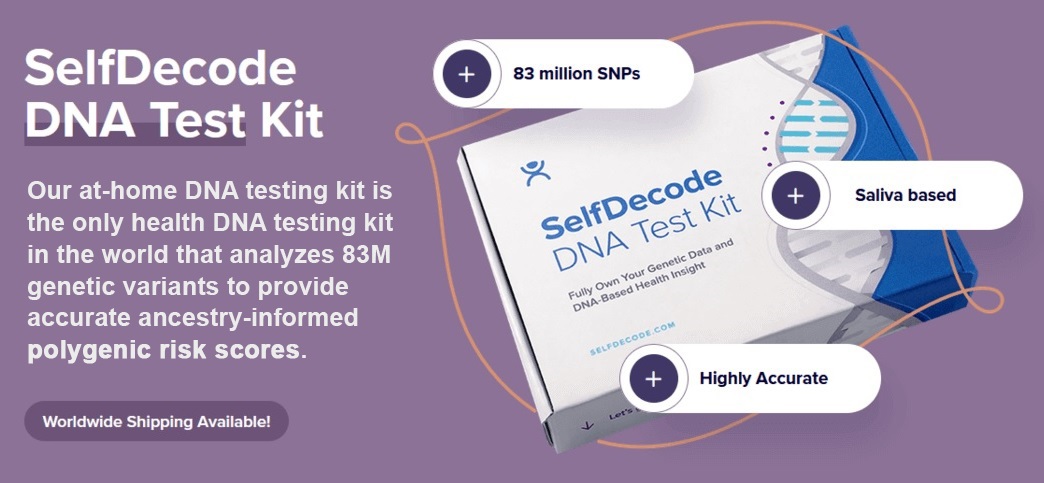
For a fuller picture, including a more complete serotonin and mood-related pathway report beyond what an uploaded file offers, the SelfDecode At-Home DNA Test Kit, priced at approximately $99, processes a new sample through SelfDecode’s own lab from the start.
The serotonin gene story is a reminder that good science sometimes means walking back an exciting early finding in favor of a more modest, more accurate one, and that family mood patterns, while real, are shaped by far more than any single stretch of DNA.
Frequently Asked Questions
Is there really a “depression gene”?
No single gene reliably predicts depression. An early, widely publicized study proposed a link between a serotonin-related gene and depression risk under stress, but larger, more recent studies have not consistently replicated that specific finding.
What is 5-HTTLPR?
5-HTTLPR is a region of the SLC6A4 gene, which produces the serotonin transporter in the brain. It comes in a shorter and longer version, with real biochemical differences, though its connection to mood and depression risk is weaker than early research suggested.
Why did the original serotonin-depression study not hold up?
The original 2003 study used a relatively small sample size, which made it easier to find a pattern that didn’t replicate as strongly in much larger studies conducted later with tens of thousands of participants.
Does mood have any genetic component at all?
Yes, current research suggests many genes, each with a small effect, contribute to mood regulation alongside substantial environmental and life experience factors, rather than any single gene acting as a strong individual predictor.
What should I do if I’m experiencing ongoing mood changes?
It’s best to speak with a doctor or mental health professional. Genetic information about mood-related genes isn’t reliable enough to explain or diagnose mood symptoms on its own.


