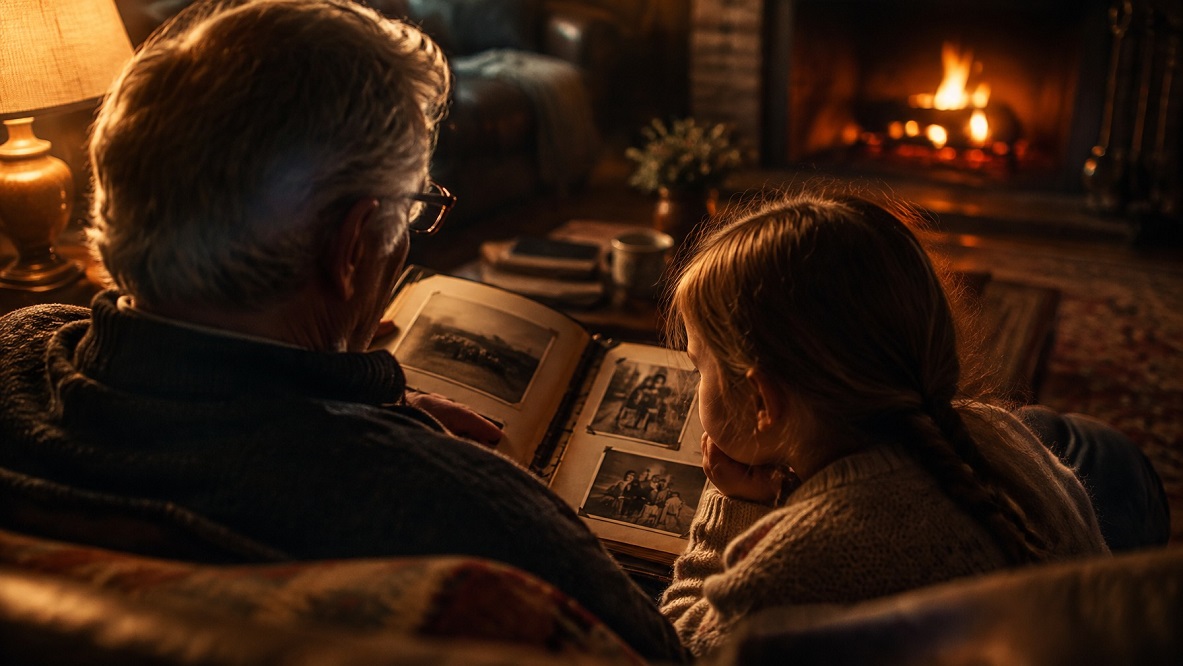
Genealogy is an act of remembering because each name you record, story you save, and date you confirm keeps a person present in your family’s story. Research is more than collecting facts. It is a choice to remember people who might otherwise go unnamed, and to give your family a shared past that others can step into.
Why Saying an Ancestor’s Name Matters
A name on a chart is a small thing, and also a large one. Writing it down says that this person lived, belonged to a family, and left a mark. Learning the name of a great-great-grandmother can change how you see your own story.
You start to notice where a family trade, a stubborn streak, or a favorite recipe might have begun. You are not making up a past. You are noticing connections that were always there, and giving each person a place in the picture. Say the name out loud once in a while. It is a simple way to keep someone close.
Stories Hold What Records Cannot
Records give you dates and places. Stories give you color. The Library of Congress notes that oral history was the main way families kept their memories long before writing existed, and that most family stories hold at least a grain of truth, even when the details drift.
A census page can tell you that your great-grandfather lived in Dayton in 1920. Only a relative can tell you he whistled while he worked. Collect both. Treat each story as a clue that points you toward a record, and treat each record as a frame that helps you place the story.
If cousins tell the same story in different ways, do not rush to pick a winner. Write down each version with the name of the person who shared it and the date you heard it. The differences are clues, and they often point to the detail you can finally confirm.
Everyday Prompts That Bring Memories Back
You do not need a formal interview to start remembering together. Try one of these prompts at your next visit or phone call:
- What did your grandmother cook on Sundays?
- Which song did your father sing in the car?
- What is the first house you remember?
- Who taught you something you still do today?
- What were holidays like when you were ten?
Small questions open big doors. Jot down the answers soon after the conversation, while the words are fresh, and note who said them and when.

Capture Family Voices in Their Own Words
PBS History Detectives suggests recording interviews with older relatives on audio or video and writing your questions in advance so you can work through them. A voice carries things that print cannot, like a laugh, a pause, or the way a place name is pronounced.
Ask permission before you record, and keep the first session short. Thirty minutes is plenty. Label each file with the speaker’s name and the date, and save a copy in a second place. Later, you can pull out a favorite line to share with the rest of the family.
Pair Each Memory With a Record
A cherished story deserves a check. When your aunt says the family arrived in 1905, look for a passenger list or a naturalization record that fits. If the record matches, you have strengthened the story. If it differs, you have learned something new, and you can note both versions side by side.
Either way, you are honoring the person who told it by taking it seriously. Write the source next to the story so the next reader knows how you know. That small step turns a family tale into something your grandchildren can trust.
Choose One Person to Remember This Week
Pick one ancestor and write a single page about them: their name, where they lived, one record, and one story. Share it with a relative and ask what they would add. One page is enough to begin a habit of remembering.
Frequently Asked Questions
Why Does Genealogy Feel So Personal?
The people in your tree are part of the reason your family exists. A single discovery, like a photo or a letter, can make a distant name feel like someone you know.
What Is the Best Way to Preserve a Family Story?
Write it down with the storyteller’s name and the date, and record the conversation if they agree. Add a note about who else might remember it differently. Then look for a record that supports the main facts.
How Do I Honor an Ancestor When Records Are Missing?
Record what you do know: the place, the time, and the neighbors. Write a short profile that describes their world, then mark the gaps as open questions. A careful profile still keeps their story alive.
Yes, if you can. Sharing a story or a photo invites others to add what they remember. Start with one page about one person.


