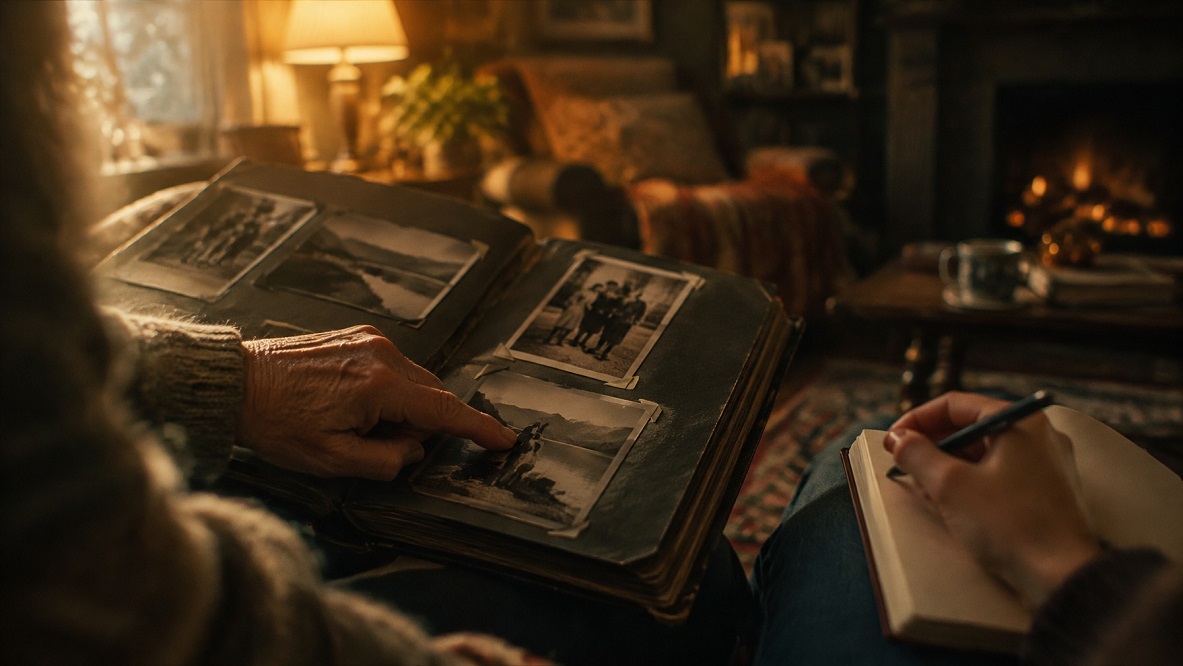
Ten good questions to ask Grandma before the holidays end cover her name, her childhood home, favorite foods, songs, first job, and proudest moments. Ask them one at a time, wait for her answer, and follow up on the details she gives. Even three questions can fill a notebook with stories your family will keep.
Why a Short List Works Best
A Library of Congress family oral history activity suggests sample questions for parents and grandparents about how children were named, what childhood was like, and which songs the family sang. These questions point to something specific, which makes them easier to answer than a huge request like, “Tell me about your life.”
A short list also keeps the visit relaxed. You are not running an interview. You are visiting, with a few good questions ready. Pick the ones that fit your grandmother, and leave the others for another day.
The Ten Questions
Here is a list you can print, fold, and tuck into your pocket:
- How did you get your name, and who chose it?
- What was the house like where you grew up?
- What meal did you love as a child, and who cooked it?
- What was a holiday like when you were small?
- What songs did your family sing?
- What was your first job, and what did you learn there?
- Who was the kindest person you knew when you were young?
- What is one of your happiest memories?
- What accomplishment makes you proudest?
- What recipe, saying, or tradition do you hope we keep?
Ask Each Question Slowly
StoryCorps, in its advice on preparing interview questions, says to let the interviewee talk freely, even if a single question fills the whole session, and not to rush to fill a pause. Both ideas are good rules for a visit with Grandma.
Ask one question, then wait. If she pauses, count to five in your head before you speak. Many stories start after a quiet moment. If she wants to stay with the first question all afternoon, that is a gift. You can save the other nine for next time.

Follow-Ups That Go Further
The answers to your ten questions will lead to better questions. When she names a street, ask what it looked like. When she mentions a person, ask what that person was like. When she describes a meal, ask who sat at the table.
Simple follow-ups work best: “What did that look like?” “Who else was there?” “What happened next?” Pick the one that matches the detail you just heard. Add a gentle fact question now and then, such as the year or the town, and mark it as a memory to confirm with a record later.
Save the Answers While They Are Fresh
If Grandma agrees, record the conversation on your phone and set it where it will not distract her. If she would rather not, bring a small notebook. Write names, places, and short phrases in her own words as she speaks, then fill in the rest right after you leave.
Photos help too. Bring two or three old pictures and ask her to tell you who is in them. Write the names on a sheet of paper with the date. A photo with names on the back becomes a family treasure, while a photo without names becomes a mystery.
Make the Visit Comfortable
Where you talk matters. Choose her favorite chair, a quiet room, and a time of day when she feels rested, such as after breakfast. Bring something to share, like cookies or a photo album. Turn off the television, and put your phone on silent unless you are using it to record.
Start with an easy question, and let her see that you are truly curious. If a topic feels tender, move on without comment. The goal is a pleasant afternoon, and any stories you gather are a bonus. Plan to visit again, because the second conversation is often richer than the first.
Choose Your Top Three Questions Today
Look at the list and circle the three questions you most want to ask. Write them in your notebook, and plan when you will see Grandma. A short visit with three good questions can leave you with pages of stories and a warm memory of your own.
Frequently Asked Questions
How Can I Encourage a Grandmother Who Is Shy About Her Past?
Start with light topics like food and songs. Show a photo and ask who is in it. Let her set the pace, and stop when she wants to.
Can I Use These Questions for Other Relatives?
Yes. Change the wording for each person and add questions about their own work and hobbies. Keep the list short.
How Long Will It Take to Ask All Ten Questions?
Plan on 45 to 60 minutes, or split them across two visits. Do not rush. One rich answer is worth more than ten short ones.
Should I Send Questions Ahead of Time?
It can help, especially for relatives who like to think first. Send three or four, and keep the rest as a surprise. Some people jot a few notes in advance.


