
Genetic counselors and researchers have long recognized that certain inherited conditions appear more frequently within specific ancestral populations than others. This isn’t a matter of one group being generally “less healthy” than another. It’s the predictable result of population genetics, where specific gene variants become more common within a population over many generations due to factors like historical isolation, founder effects, and in some cases, an evolutionary trade-off with protection against a different disease entirely.
Understanding this pattern is genuinely useful, both for genealogists piecing together family health history and for anyone curious about their own genetic background. This article explains why certain conditions cluster within specific ancestral populations, walks through some of the most well-documented examples, and clarifies what population-level risk actually means for an individual, since the topic is easy to misunderstand without the right context.
How Genetic Risk Varies by Ancestral Population
Every population carries a mix of genetic variants, some more common than others. When a population remains relatively isolated for many generations, whether due to geography, culture, or history, certain variants that might be rare elsewhere can become more common within that specific group. This is sometimes called a founder effect, referring to a pattern that traces back to a smaller founding population where a particular variant happened to be present.
An Evolutionary Trade-Off in Some Cases
In other cases, a variant becomes more common because it offered a genuine survival advantage against a different threat. The classic example is the genetic variant associated with sickle cell trait, which became more common in populations from regions with a long history of malaria, since carrying one copy of the variant offers some protection against malaria infection, even though inheriting two copies leads to sickle cell disease. It’s a clear illustration of how a variant can persist in a population precisely because of the protection it once provided against something else entirely.
Well-Documented Examples of Ancestry-Linked Conditions
Several conditions are well established in medical and genetic research as occurring more frequently within specific ancestral populations. Tay-Sachs disease occurs at a notably higher frequency among people of Ashkenazi Jewish ancestry, along with certain French Canadian and Cajun populations. Cystic fibrosis occurs more frequently among people of Northern European ancestry. Thalassemia, a group of inherited blood disorders, is more common among people with Mediterranean, Middle Eastern, and Southeast Asian ancestry. Certain BRCA gene variants linked to increased hereditary cancer risk also occur at a higher frequency specifically within Ashkenazi Jewish populations compared to the general population.
These aren’t isolated curiosities. Genetic counselors routinely take ancestry into account when assessing which conditions might be worth screening for, precisely because these population-level patterns are well documented and consistently replicated across research. Prenatal carrier screening programs, for instance, often specifically flag certain tests as more relevant based on a patient’s reported ancestry, a practice built directly on decades of this kind of population genetics research.
Why Population-Level Risk Isn’t the Same as Individual Destiny
It’s important to be clear about what these patterns actually mean. A higher frequency within a population describes a statistical pattern across a large group of people, not a guarantee about any single individual. Plenty of people with ancestry linked to a particular condition never carry the associated variant at all, and people without that ancestry can still carry variants associated with conditions more commonly linked to other populations, particularly in an era where mixed ancestry is increasingly common.
This distinction matters because population-level statistics are meant to inform which screenings might be worth considering, not to predict any one person’s health outcome. Genetic risk is complex, involving many variants along with lifestyle and environmental factors, and ancestry is just one piece of a much larger picture. Treating a population-level pattern as a personal certainty, in either direction, misrepresents what the underlying research actually shows.
Checking Your Own Genetic Risk Factors
If you’ve already taken a DNA test for genealogy purposes, your downloadable raw DNA file contains genetic markers connected to many of these well-documented conditions, separate from anything used to calculate your ethnicity percentages. Uploading that file to a health-focused platform like SelfDecode allows you to see whether specific genetic variants relevant to your own ancestral background appear in your results.
It’s worth setting expectations here. An uploaded file provides a more limited preview than SelfDecode’s own dedicated DNA kit, since third-party files cover a smaller portion of the genome and haven’t gone through SelfDecode’s in-house lab processing and validation, so the results are less complete and less precise than what their own kit provides.
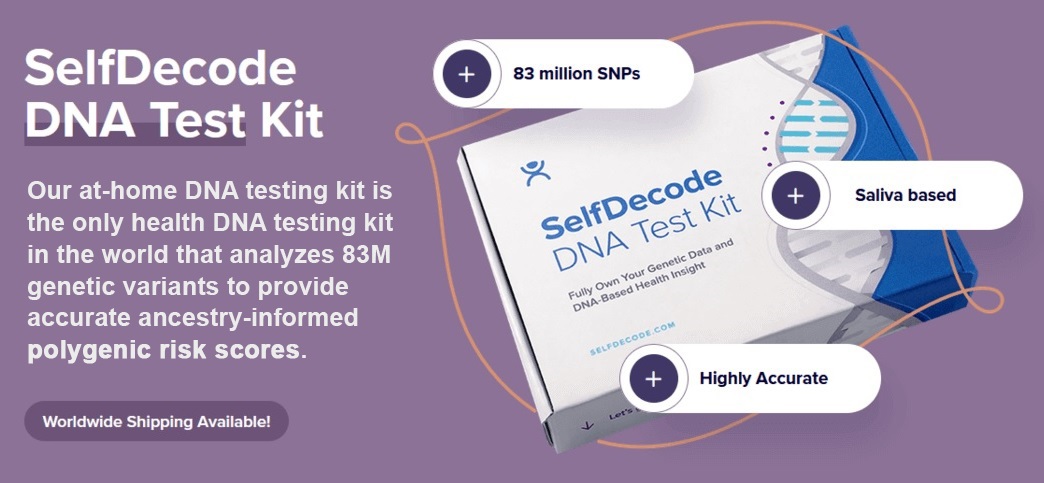
For a more thorough and validated look at genetic factors relevant to your ancestral background, the SelfDecode At-Home DNA Test Kit reads a much larger share of your genome and unlocks detailed reports across a wide range of health categories. It’s worth noting that for conditions with serious health implications, discussing results with a genetic counselor or physician is always recommended alongside any consumer genetic analysis.
Ancestry has always shaped more than family stories and surnames. In some well-documented cases, it shapes genetic risk too, and understanding that connection gives you a fuller, more informed picture of your own health background.
Frequently Asked Questions
Why do some genetic conditions occur more often in specific ancestral populations?
This often results from founder effects, where a variant present in a smaller founding population becomes more common over generations, or from an evolutionary trade-off where a variant offered protection against a different disease.
What is an example of a condition linked to a specific ancestral population?
Tay-Sachs disease occurs at a notably higher frequency among people of Ashkenazi Jewish ancestry, while cystic fibrosis is more common among people of Northern European ancestry.
Does having a specific ancestry mean I will develop a condition linked to that population?
No. Population-level frequency describes a statistical pattern across a large group, not a guarantee for any individual. Many people with linked ancestry never carry the associated variant.
Can I check for ancestry-linked genetic variants using a DNA test I’ve already taken?
Yes. Raw DNA files from services like AncestryDNA or 23andMe can be uploaded to a health-focused platform such as SelfDecode to check for genetic markers connected to well-documented conditions.
Should I speak with a professional about ancestry-linked genetic risk?
Yes. For conditions with serious health implications, discussing results with a genetic counselor or physician alongside any consumer genetic analysis is recommended.


