Experienced genealogists know that research is rarely finished the first time through. A brick wall that seemed permanent five years ago sometimes falls the moment a new record collection gets digitized. A DNA match that meant nothing at first glance turns out to be significant once a few more relatives test and the picture becomes clearer. Revisiting old research with fresh eyes and new tools is simply part of how genealogy works, and it’s a habit worth applying to something many people have never thought to revisit at all: their own raw DNA file.
Most people looked at their DNA test results once, right after testing, and never went back. That’s a missed opportunity, since both the tools available for interpreting DNA and the data sitting in that file have far more potential than a single glance ever reveals. This article looks at why genealogists already understand the value of revisiting old research, and why that same instinct applies directly to a DNA file most people haven’t opened in years, let alone reexamined with a critical eye.
Why Genealogists Revisit Old Research Anyway
Genealogy as a hobby is built around periodic reexamination. Record collections get digitized and indexed years after a researcher first hit a wall looking for them. DNA databases grow every year as more people test, occasionally surfacing matches that didn’t exist during an earlier search. Genealogical societies and communities regularly share newly available resources that make old brick walls solvable in ways they simply weren’t before. Experienced researchers build this reexamination into their process, treating a stalled research question as temporarily paused rather than permanently closed.
The Habit That Sets Serious Genealogists Apart
This willingness to revisit old ground is part of what separates a casual hobbyist from someone who treats genealogy as serious, ongoing research. The underlying assumption is simple: just because a resource wasn’t available or a connection wasn’t visible last time doesn’t mean it never will be. New tools and new data continue to change what’s possible, often in ways that reward researchers who check back periodically rather than assuming their earlier research was the final word. The same patience that eventually pays off with a stubborn ancestor tends to pay off here too.
Your DNA Data Deserves the Same Second Look
The same logic applies directly to the raw DNA file sitting in your ancestry account. When you first tested, the tools available for interpreting that data were limited largely to ethnicity estimation and relative matching. The file itself, however, has always contained far more information than those two applications ever used. A second look at that same file, using tools that didn’t necessarily exist or weren’t on your radar when you first tested, can reveal an entire category of information your original research never touched.
Unlike a brick wall that requires waiting for new historical records to surface, this second look doesn’t require waiting for anything. The data has been sitting there the whole time, ready for a different kind of analysis whenever you’re ready to pursue it. In that sense, it’s an easier win than most genealogical brick walls, since the missing piece was never the data itself, only the decision to look at it differently.
What’s Changed Since You Last Looked at Your Raw File
Health-focused genetic analysis has developed considerably as a field, with platforms now capable of interpreting raw DNA data for patterns connected to metabolism, sleep, mood, and other everyday traits. If your last interaction with your DNA file was downloading it once and never opening it again, there’s a reasonable chance you’re unaware of just how much interpretation capability now exists for that exact same data.
Taking a Second Look at the Health Side of Your Data
Revisiting your DNA data for health insights starts with downloading your raw file, if you haven’t already, from your original testing company’s account. From there, uploading it to a health-focused platform like SelfDecode allows you to explore genetic patterns entirely separate from anything your original ancestry report covered.
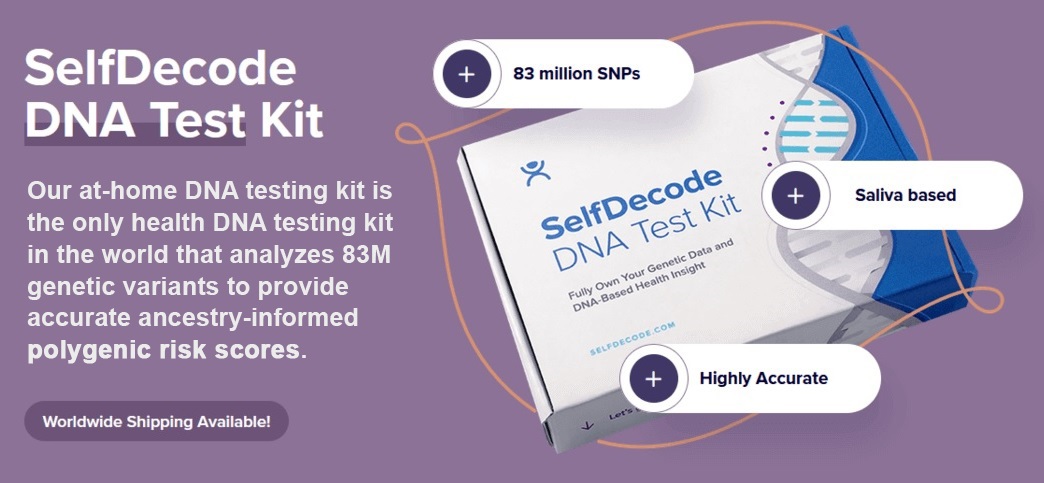
It’s worth setting expectations here. An uploaded file provides a more limited preview than SelfDecode’s own dedicated DNA kit, since third-party files cover a smaller portion of the genome and haven’t gone through SelfDecode’s in-house lab processing and validation.
For genealogists who want to give their DNA data the same thorough second look they’d give a stalled research question, the SelfDecode At-Home DNA Test Kit reads a much larger share of the genome and unlocks detailed reports across a wide range of health categories, offering a considerably more complete picture than revisiting the original file alone.
The brick walls in your family tree eventually fall when you’re willing to look again with fresh eyes. Your DNA file deserves that same willingness, since the story it can tell has never actually finished being told. Treating it as a closed chapter simply because you looked at it once is exactly the kind of premature conclusion genealogists have learned to avoid everywhere else in their research.
Frequently Asked Questions
Why do genealogists revisit old research instead of considering it finished?
New records, tools, and DNA matches become available over time, meaning a research question that seemed unsolvable in the past may become solvable later.
Has DNA interpretation technology changed since I first tested?
Yes. Health-focused genetic analysis has developed considerably, with platforms now able to interpret raw DNA data for traits related to metabolism, sleep, and mood that weren’t widely accessible before.
Do I need new DNA testing to take a second look at my genetics?
Not necessarily. You can use the raw DNA file you already downloaded from your original testing company by uploading it to a platform like SelfDecode.
Is an uploaded file as thorough as a dedicated health DNA kit?
Not quite. Uploaded files provide a more limited preview, since they cover less of the genome and haven’t gone through SelfDecode’s in-house lab processing and validation, unlike their dedicated kit.
What kind of information might a second look at my DNA reveal?
A second look through a health-focused platform can reveal genetic patterns related to metabolism, sleep, mood, and other lifestyle traits not covered by standard ancestry reports.


