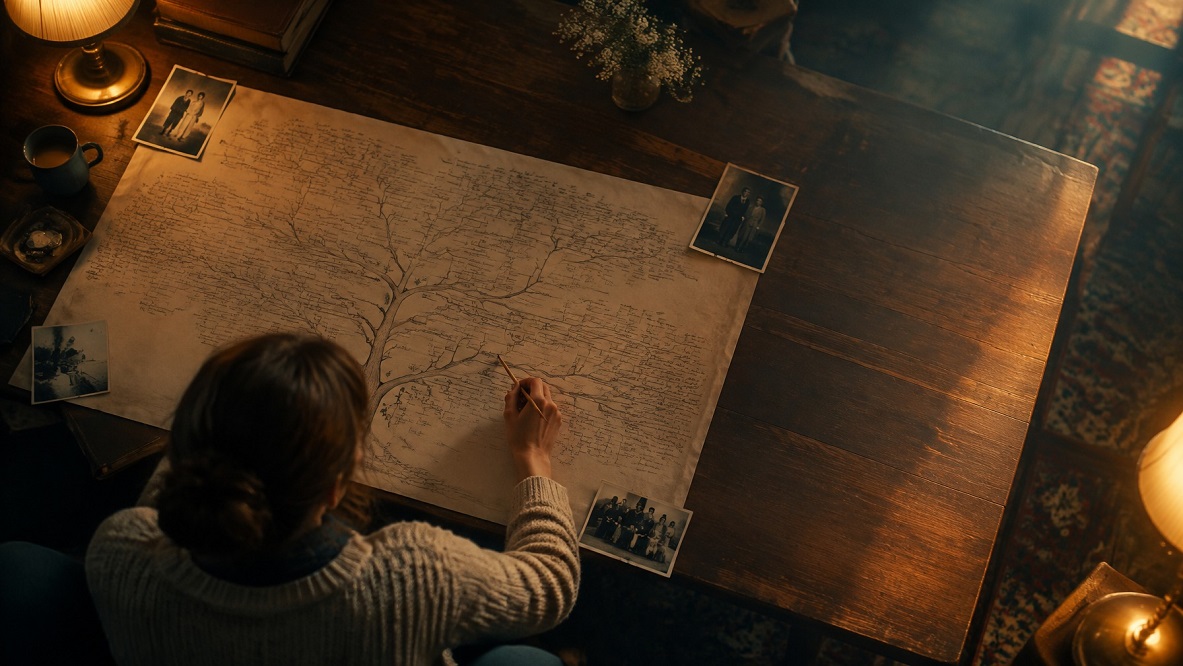
To keep family lines straight when every generation has a John, treat each man as a separate person until the evidence connects him. Give each one an identity summary, track his wife, children, land, and neighbors, and never rely on Jr. and Sr. alone. Naming patterns offer hints, but only records can prove which John belongs to which line.
Why Repeated Names Cause So Many Mix-Ups
Repeated names were not an accident. According to the Larimer County Genealogical Society, many families followed a traditional order for naming children. The first son was named for his paternal grandfather, the second for his maternal grandfather, and the third for his father. Daughters followed a similar order with the grandmothers and mother.
When several brothers and cousins follow that custom in the same community, you can end up with multiple men named John of similar ages, living close together. Records often fail to say which John they mean.
Use Naming Patterns as Hints, Not Proof
Naming patterns can help you test a theory. If you know a family’s grandparents, a matching sequence of names can suggest you have found the right family. Repeated unusual names can also help sort people onto the right branches.
The same society page includes an important caution: naming patterns alone do not prove relationships. A name like John, repeated across many generations, tells you very little. Use the pattern to generate questions, and then look for records that answer them.
Build an Identity Summary for Every John
Give each man his own profile and keep it at the top of his notes. Include the details that set him apart from his namesakes:
- Estimated birth year and place
- Wife’s name and marriage date
- Names of his children
- Land, farm, or business he owned
- Church or community where he was active
Add a working label, such as “John of Cedar Creek” or “John, husband of Sarah.” These labels are not official names, but they help you remember which John you are discussing.

Do Not Trust Jr. and Sr. Alone
It seems logical that Jr. means son and Sr. means father, but old records were more flexible. The Ancestor Hunt explains that the labels often simply separated two men with the same name in a community, usually the older and the younger. The men could be uncle and nephew, cousins, or even unrelated neighbors. A man called Jr. might also be recorded as Sr. after the older man died or moved away.
Treat these suffixes as clues for telling people apart, not proof of how they were related.
Look to Land and Legal Records for Extra Detail
Deeds, wills, tax lists, and court papers often identify men by more than their names. A deed may name a wife, a will may list children, and a tax list may show who owned which tract of land. Use these records to anchor each John to specific property and family members. When two men named John appear in one document, read closely to see how the document describes each one.
Sort Records by Household, Not by Name
When names are identical, tie every record to the people and places around the man. Start with a chart that has one column for each John. Fill in the records you find, and assign each one based on wife, children, neighbors, and land, rather than on the name alone.
If a record does not fit clearly, place it in an “unassigned” column and revisit it later. This prevents you from forcing a record onto the wrong John, which is how many family trees end up with tangled lines.
Give Each John His Own Page
Start with the generation that confuses you most. Create a page for each John, write his identity summary, and sort the records you already have. Even if some records stay unassigned, you will see your family lines much more clearly.
Frequently Asked Questions
How Can You Tell Two Men Named John Apart in the Census?
Compare ages, birthplaces, wives, children, and neighbors. The household around each man is usually more distinctive than his name. Following the same families across several census years helps even more.
Does Jr. Always Mean Son?
No. In many historical records, Jr. and Sr. only distinguished the younger man from the older man with the same name. They could be unrelated, or related as cousins or uncle and nephew. Look for other evidence before assuming a father and son connection.
What If Two Men Named John Had Wives With the Same Name?
Use other details, such as marriage records, land transactions, and the names and birth dates of the children. Keep the two men separate until the evidence clearly shows who is who. Sorting by household helps a great deal.
Should You Create Separate Tree Entries for Uncertain Matches?
Yes. It is easier to merge two entries later than to untangle one entry that holds two people. Label each entry clearly, and add notes on why you kept them separate.


